



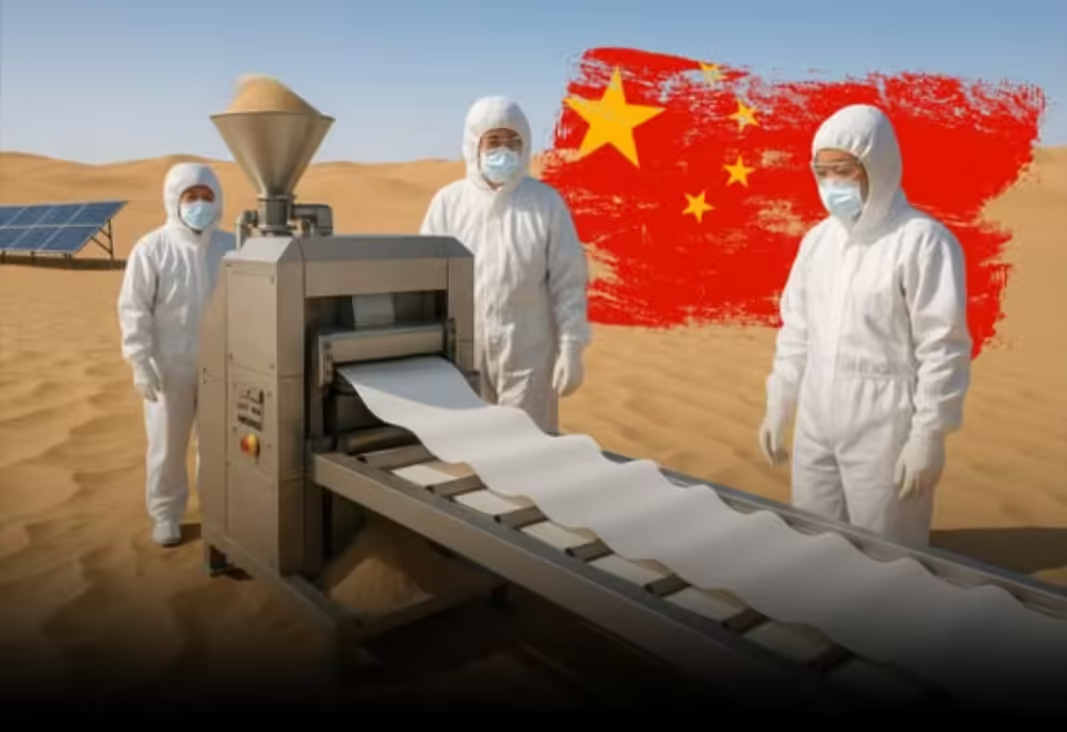
From Dust to Document: China’s Bold Leap into Sand-Based Paper Technology
As the world increasingly cries out for sustainable solutions, a team of Chinese researchers has taken the most unlikely step-turning desert sand into a revolutionary new form of paper that could one day reshape the global paper industry, reduce the burden on forests, and even transform barren landscapes into valuable economic assets: sand-based paper.
A New Kind of Paper—Born from the Desert
Whereas traditional paper manufacture is highly dependent on wood pulp, which is linked to deforestation, high water usage, and an ecological footprint, the new experimental material will be produced through the mixture of desert sand, waste fibers from textiles, and a resin of a special type. The main constituent is the calcium carbonate in the sand that produces a smooth and resistant, yet pleasing appearance.
The resulting sheet bears a striking resemblance to conventional paper, in feel and appearance, but its origins actually lie far from the forest—right in the heart of some of the world’s driest deserts.
How the Innovation Works
Whereas the process of making paper from wood pulp requires intensive pulping, bleaching, and drying, in the sand-based alternative, many of these resource-intensive steps are skipped. Using a combination of reclaimed fibers and resin to hold the particles together, the researchers have produced strong and flexible sheets that can endure wear and tear.
The early prototypes hold much promise:
- Smooth surface finish – ready to print
- High durability, reducing tear risk
- Saves more water than traditional papermaking
- Industrial waste utilization, turning refuse into resources
This promises to be a game-changing approach for regions grappling with water scarcity and deforestation.
Still an Experiment—But Full of Promise
It is important to note that, even now, this technology remains in its infancy. The project has yet to be in full-scale commercial production, let alone undergo the most intense scrutiny from peer-reviewed scientific validation. Researchers concede their continued struggles with cost-efficiency, resin optimization, and analysis of the long-term environmental impacts.
But the very idea of value extracted from deserts-a resource previously considered inhospitable and economically underutilized-already captured global attention. Provided the material scales, it could redefine how developing nations think about their natural environs.
A Greener Future in the Making
The implications are enormous. Sand-based paper could:
- Cut global deforestation rates by reducing reliance on wood pulp
- Save millions of liters of water a year
- Create new industries in desert-dominated regions
- Reduce wastage by adding discarded fibres
Picture factories along the edges of deserts, transforming endless dunes into environmentally friendly building materials without interfering with natural habitats or depleting local water supplies. This is not just environmental innovation; this is economic transformation.
A Glimpse into Tomorrow
As the world waits for further testing, one thing is clear: innovations like sand-based paper push the boundaries of what sustainability can look like. They challenge industries to rethink decades-old practices and explore abundant, overlooked natural resources.
But the experimental breakthrough by China, though still in its infancy, holds the promise of a future in which paper no longer costs the earth.
For more interesting discoveries and international news, visit Pakistan Updates.