



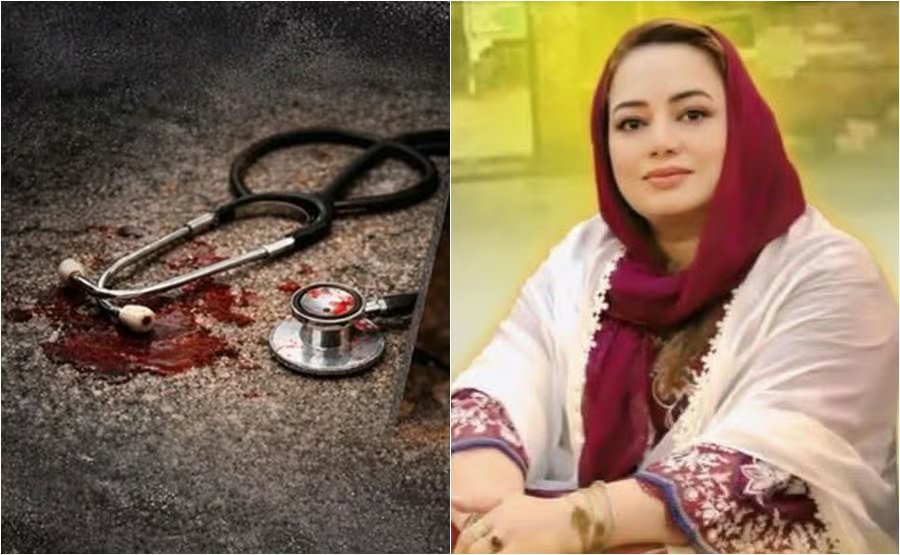
Dr. Mehwish Hasnain reportedly lost her life in a tragic incident outside a hospital in Kohat
The news about Dr. Mehwish Hasnain hit hard. People across Pakistan—especially those in the medical field—felt the shock. It all started outside a hospital in Kohat, after what should’ve been a simple, routine exchange. Dr. Mehwish reportedly asked someone to leave a space meant for women patients. Just following protocol, doing her job. But that conversation didn’t end there. Things got heated fast, and before anyone could process what was happening, the situation turned violent. We lost a doctor that day—a loss that’s left everyone reeling.

Police are digging into what happened. Right now, everyone’s waiting for answers, but the worry is already spreading. Doctors, nurses, and everyday people are all talking about it, wondering how something like this could happen right outside a hospital.
Dr. Mehwish Hasnain wasn’t just another name in the healthcare system. Her friends and colleagues describe her as the kind of doctor you’d want by your side—compassionate, focused, always there for her patients. Losing her isn’t just about one family’s heartbreak; it’s a blow to everyone who believes in the power of care and service.
Social media is full of messages—stories, tributes, even anger. People are grieving, but they’re also demanding change. Hospitals are supposed to be safe. Lately though, there’s been a growing sense of unease. Disputes, harassment, violence—it’s all happening more often than anyone wants to admit.
Doctors and nurses already carry a heavy load. Long hours, tough cases, the stress of life-and-death decisions. Now add the fear that even the workplace isn’t safe. That shouldn’t be part of the job. After Dr. Mehwish’s death, more voices are calling for stronger security—better cameras, strict access rules, and real consequences for anyone who threatens staff.
This isn’t just about policy. At its core, it’s about respect—respect for the people who keep hospitals running, respect for the rules that protect patients. No one should ever have to worry that asking someone to follow those rules could cost them their life.
People want answers, but they want justice too. They’re pushing for a clear investigation and real accountability. The hope is that if authorities act now, it’ll send a message: violence won’t be tolerated in hospitals, period.
We need to remember Dr. Mehwish Hasnain for the work she did, not the way she died. Her story is a wake-up call. It’s time to make hospitals safer, to teach respect, and to stand up for the people who stand up for us every day.
As the investigation unfolds, all eyes are on what comes next. The country’s hoping for change—real change that protects those who dedicate their lives to helping others.
Let Dr. Mehwish Hasnain’s legacy push us toward a future where hospitals are true sanctuaries—places of care, safety, and dignity for everyone.