



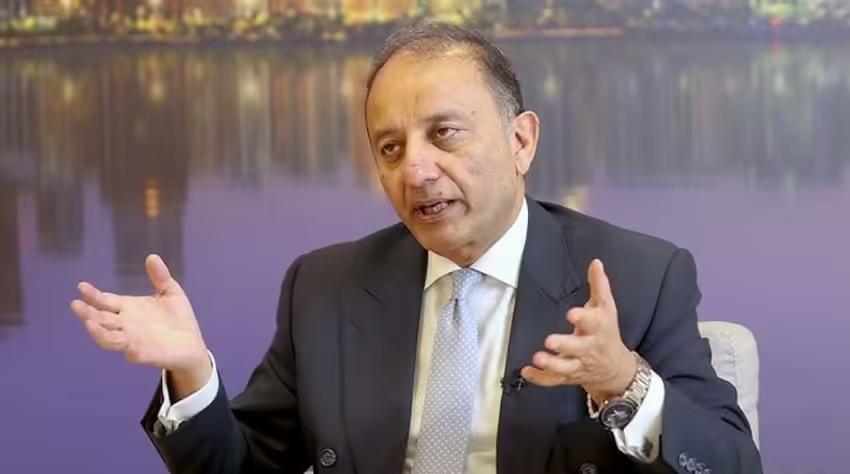
In a significant push for digital climate action, Minister for Climate Change Dr. Musadik Malik addressed the National Artificial Intelligence Workshop in Islamabad on February 10, 2026. He positioned Artificial Intelligence (AI) as a “watchdog” that can revolutionize how Pakistan handles environmental crises
Here is a breakdown of the key highlights from his address and the state of climate vulnerability in the country:
AI: From Data Gaps to Disaster Prevention
Dr. Malik emphasized that fragmented and sparse data often hamper Pakistan’s current policymaking. He argued that AI can bridge these gaps through:
Predictive Analytics: Using modeling to identify potential disasters before they strike.
Resource Optimization: Designing interventions that maximize impact even with limited financial resources.
Integrated Monitoring: Fusing multiple technologies (satellite imagery, ground sensors, etc.) to function as an early warning system.
Mapping Pakistan’s Most Vulnerable Districts
The Minister referred to the Pakistan Vulnerability Report (based on the District Vulnerability Index), which identifies 20 districts at extreme risk. These districts face a “double burden” of poverty and high exposure to extreme weather like floods and heatwaves.
The Most Vulnerable Districts (Top 20)
| Province | Number of Districts | Notable Locations |
| Balochistan | 18 | Washuk, Khuzdar, Zhob, Kohlu, Musakhel, Dera Bugti, Kalat, Chagai, Awaran, Kharan |
| Khyber Pakhtunkhwa | 2 | North Waziristan, Kohistan |
Key Statistic: Approximately 10 million people (roughly 11.3% of the population) live in these 20 high-risk zones, including millions of women and young children.
A Note of Caution: The Human Element
While optimistic about technology, Dr. Malik issued two critical warnings:
Human Judgment: He cautioned against “blind reliance” on AI, noting that over-dependence could erode critical thinking and human decision-making.
Employment Impact: He warned that the next phase of the AI revolution—specifically, AI agents- could replace certain job functions, necessitating urgent reskilling of the public service workforce.
Visit Pakistan Updates For More Updates