



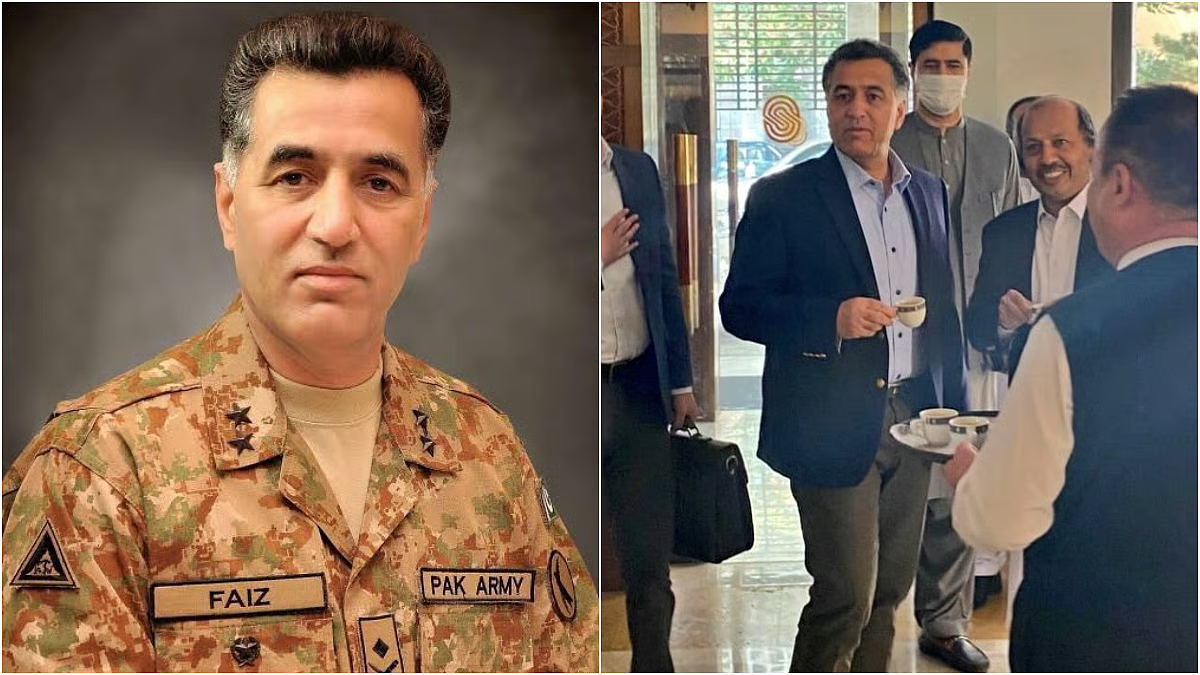
Former ISI Chief Faiz Hameed, Sentenced to 14 years in prison after a 15-month military court trial
In a moment that has captivated national and international attention, former Inter-Services Intelligence, or ISI, chief Lieutenant General, Retd, Faiz Hameed has been convicted on charges by the Field General Court Martial and sentenced to 14 years rigorous imprisonment. This verdict, promulgated on December 11, 2025, has created a milestone in Pakistan’s military history, wherein a former head of the country’s most powerful intelligence agency has been held liable for extended incarceration due to actions performed outside the ambit of military law.
Charges and Conviction: The Core of the Case
The Field General Court Martial, headed under the Pakistan Army Act, charged Faiz Hameed with a trial on August 12, 2024, after several months of investigation and internal review. The trial, which stretched for a period of 15 months, resulted in Hameed being found guilty on four major counts:
- Engaging in political activities prohibited for serving and retired senior officers.
Violation of the Official Secrets Act in a manner detrimental to state safety, - Abuse of authority and government resources.
- Causing wrongful loss to persons.
The military’s media wing, the Inter-Services Public Relations (ISPR), made it clear that these proceedings were exhaustive and complied fully with legal and procedural norms, including the right for Hameed to have legal representation of his choice.
Understanding the implications of this sentence
Faiz Hameed’s conviction is unprecedented: for the first time ever, a former director-general of ISI, one of the most influential posts within Pakistan’s national security apparatus, has been tried and convicted by a military court. The 14-year sentence also reflected how seriously the military judicial system regarded the offenses, given the sensitive responsibilities attached to his former job.
This verdict also sends a significant message about accountability within the Pakistani establishment. Whether seen as a stand for the rule of law or as interpreted through the prism of internal power play, the ruling breaks long-held precedents with regard to senior military autonomy. Analysts and commentators alike note its potential influence on civil-military relations in the years to come.
The Right to Appeal and Ongoing Proceedings
Despite the severity of the sentence, Faiz Hameed still retains the legal right to appeal the court-martial decision at an appropriate military appellate forum, as per the provisions of the Pakistan Army Act. This means the legal battle may continue even as the sentence stands.
Furthermore, separate investigations continue regarding suspected political incitement and foreign collusion; the military has signaled that aspects of Hameed’s behavior linked to larger political occurrences are being handled outside of the present judgment.
National Reaction and Broader Context
Reactions to the conviction have been mixed but deeply engaged across the country’s political and media landscapes. Some political leaders welcomed the ruling as historic enforcement of the rule of law, suggesting that no single person, irrespective of stature, should be beyond the reach of law. Others place the case within the larger, complex web of Pakistan’s evolving civil-military dynamics.
International observers have also interpreted the verdict as indicative of shifting norms inside Pakistan’s powerful military establishment — a shift that can have wide implications for governance, civil liberties, and institutional authority into the future.
The conviction of Faiz Hameed is more than just a high-profile legal outcome; it is a historical moment that reverberates through the institutional corridors and political debates in Pakistan. It remains to be seen whether the verdict would become a sustained precedence for accountability or if it is only an isolated incident amidst growing tensions between different layers of power. But one thing is sure: this chapter in Pakistan’s history will be debated and analyzed for years to come.
Keep tuned to Pakistan Updates for more details.