



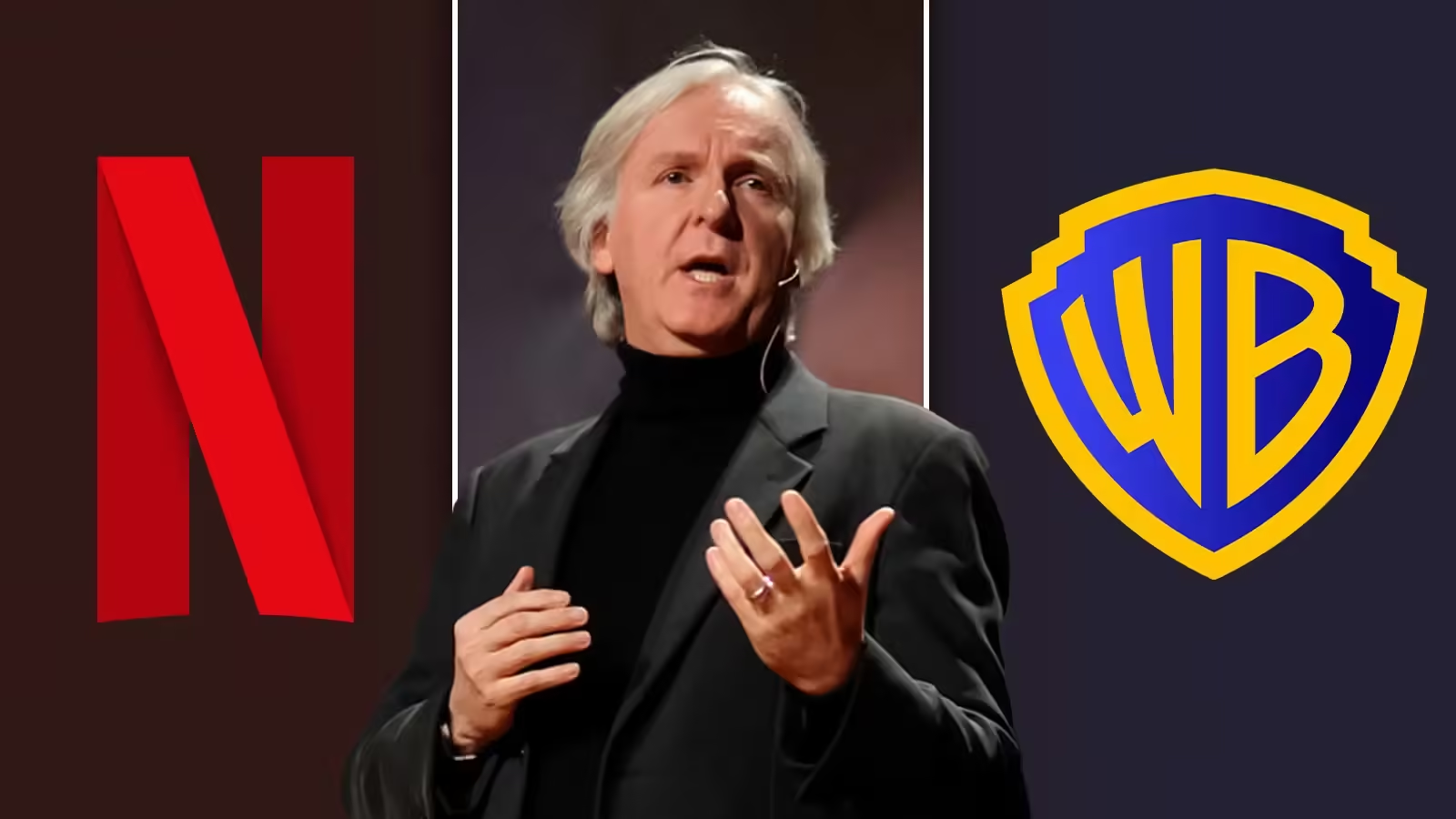
James Cameron Raises the Red Flag Over Netflix’s Bold Move!
In a development that has shaken the entertainment world, renowned filmmaker James Cameron has voiced his public disapproval of Netflix as reports filter in that the streaming behemoth is bidding to buy Warner Bros., one of Hollywood’s oldest and most iconic studios. The remarks have sent ripples across the global film community, raising many questions over the future of cinema in an era dominated by digital platforms.
While mergers in entertainment are nothing new, to Cameron, this particular move is not merely a business transaction but a potential **turning point for the cinematic medium as a whole.
The scientific collaboration happens not only among those who work in the same institution, but also among people from different countries.
A Clash of Philosophies: The Big Screen vs. The Stream
Cameron has long been an outspoken champion of *the theatrical experience*, asserting that cinema must be immersive, communal, and culturally impactful. He believes if Netflix were to gain control of Warner Bros., one of the last great studios still championing traditional filmmaking, the consequences could be dire.
But as Cameron sees it, streaming giants emphasize volume over vision-a production environment where content is disposable rather than unforgettable. Warner Bros., historically home to franchises ranging from The Dark Knight and Harry Potter to The Matrix and innumerable cinematic classics, represents the very soul of Hollywood’s theatrical legacy.
“If Warner Bros. moves away from cinematic heritage to output based on algorithms, the art form will suffer,” Cameron says.
Warner Bros.: A Century of Cinematic Identity at Stake
Warner Bros. is not just a studio, but a symbol of Hollywood history, storytelling excellence, and creative risk-taking-from championing iconic directors to producing multi-billion-dollar blockbusters, this studio has been at the center of global movie culture.
The idea of that legacy being taken in by a tech-streaming ecosystem upsets the filmmakers and traditionalists. This, for them, will not be an example of innovation but cultural erosion.
Netflix’s Vision: Expansion or Encroachment?
While Netflix has doubtless changed the game of entertainment consumption, its ambitions keep on growing. Adding Warner Bros. to its stable would grant it unprecedented power: a universally recognized studio, a huge theatrical pipeline, and one of the richest film archives in existence.
From Netflix’s point of view, this would further solidify its lead against studio-backed competitors such as Disney+ and Prime Video. Critics—of whom Cameron is one—worry that such dominance could dismantle the creative ecosystem that thrives on diversity in studios, formats, and philosophies of storytelling.
The Bigger Debate: What Is the Future of Cinema?
Cameron’s comments point to a broader tension that has long been present:
Is cinema evolving or disappearing?
As theaters struggle post-pandemic, the identity of cinema hangs in the balance with streaming platforms reshaping audience behavior. A Netflix-Warner Bros. merger could tilt that balance further toward a world where films are treated as content rather than cultural events.
Cameron’s warning is not about business alone but about retaining the magic of the big screen, film as an art, and cinema as a common cultural offering to humanity.
This reported Netflix Warner Bros acquisition has transcended corporate headline to a flashpoint in the battle for the soul of cinema. It is unclear if this possible deal will reshape the industry for better or worse, but one thing is for sure: if James Cameron is sounding the alarm, then Hollywood-and the world-should be paying attention.
Click here for more breaking updates and global developments at Pakistan Updates