



Middle East Regional Escalation 2026: Conflict Spreads Beyond Borders
The Middle East regional escalation 2026 has reached a terrifying peak. In less than 72 hours, what began as a targeted U.S.-Israeli campaign against Iranian military assets has ricocheted across the globe, threatening over 300 million civilians across more than a dozen nations. From the Mediterranean to the Persian Gulf, the “surgical” nature of the initial strikes has given way to a sprawling, volatile conflict that few were prepared for.
The 72-Hour Blowback: A Geographic Sprawl
Since the first strikes on Saturday morning, March 1, 2026, the conflict has ignored traditional borders. The speed of the escalation has buried civilians in a debris field stretching from Beirut to Abu Dhabi.
| Country | Reported Fatalities | Key Targets/Impacted Areas |
| Iran | 555 | Command-and-control, military infrastructure |
| Lebanon | 52 | Hezbollah positions, southern suburbs of Beirut |
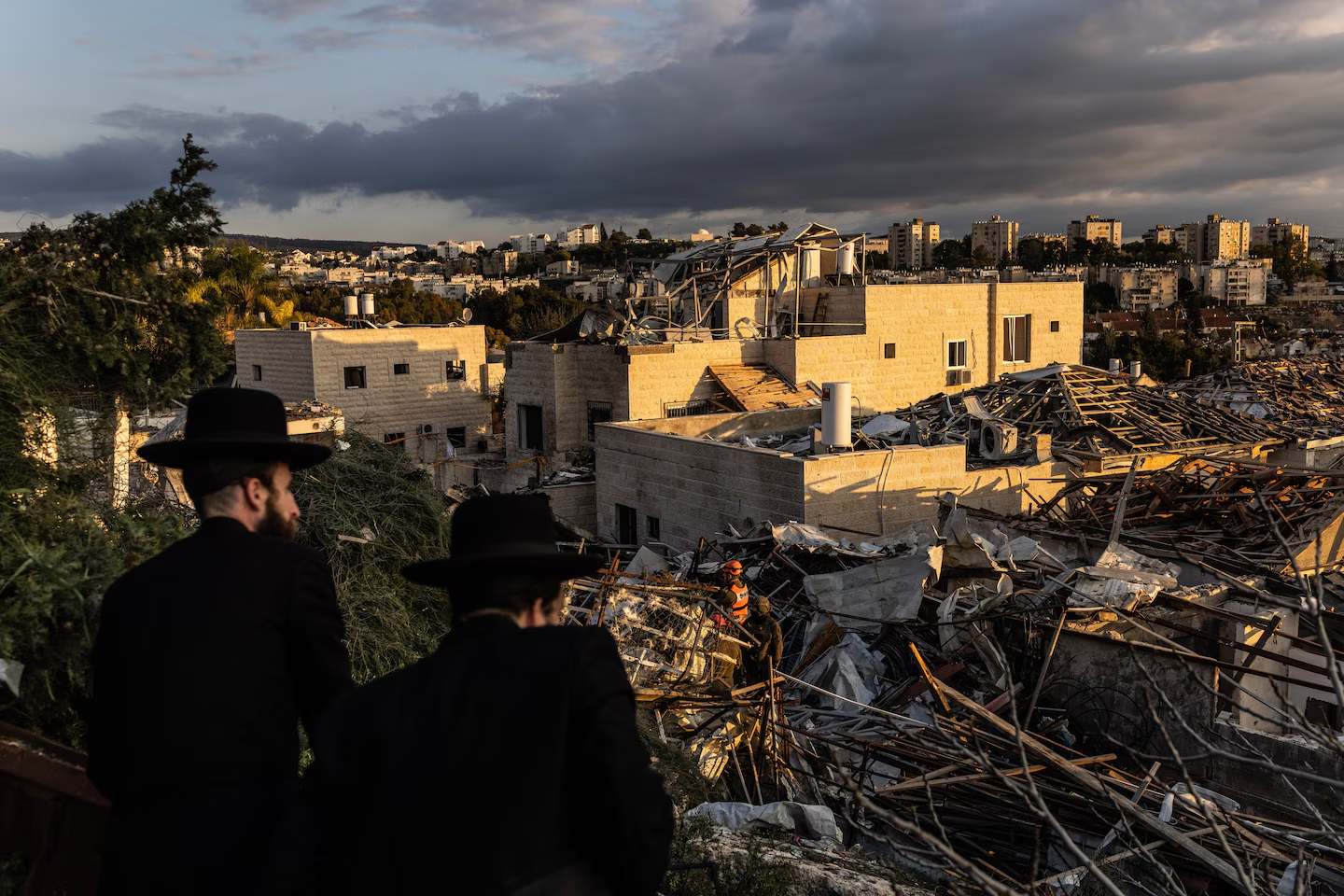
| Israel | 10 | Beit Shemesh residential areas, synagogue shelters |
| UAE | 3 | Hotels and residential complexes in Dubai/Abu Dhabi |
| Iraq | 2 | Militant-held regions and urban centers |
| Bahrain / Oman / Kuwait | 1 each | High-rises, commercial ports, industrial zones |
In a historic and alarming first, Cyprus—a European Union member—reported explosions at a British base on Sunday, marking the first time the conflict has touched European soil.
Civilian Toll: “It is a Nightmare”
The Middle East regional escalation 2026 is increasingly defined by its impact on non-military targets. In Beit Shemesh, Israel, an Iranian missile vaporized a building above a synagogue shelter, killing nine people. Survivors described waking up surrounded by the bodies of neighbors and children.
Similarly, in Lebanon, thousands have been displaced as Israel targets Hezbollah strongholds. The Jesuit Refugee Service in Beirut reported that churches have been converted back into shelters to house terrified migrant workers and local families fleeing the bombardment.
The Gulf’s Strategic Dilemma
The Gulf monarchies, particularly the UAE and Saudi Arabia, find themselves in their “worst nightmare.” Despite their efforts to mediate and remain non-aligned, the conflict has forced them closer to the U.S.-Israeli position.
-
Economic Impact: The strikes on Dubai’s hotels are a direct hit to the tourism sector.
-
Energy Security: The Strait of Hormuz remains a major concern, as any closure could lead to global oil shocks.
-
Military Involvement: Reports suggest some Gulf states may be opening their territory for U.S. tactical routes, despite initial pledges to remain neutral.
Pentagon Update: US Losses
The Pentagon has confirmed that six U.S. soldiers have been killed in the hostilities so far. Additionally, three U.S. F-15E Strike Eagles were downed by friendly fire over Kuwait; however, the six crew members managed to eject safely.
As the U.S. closes embassies in Kuwait and other nations, the question remains: where does this end? With 12 nations already in the blast radius, the regional spillover is no longer a threat—it is a reality.
Please visit Pakistan Updates For More