



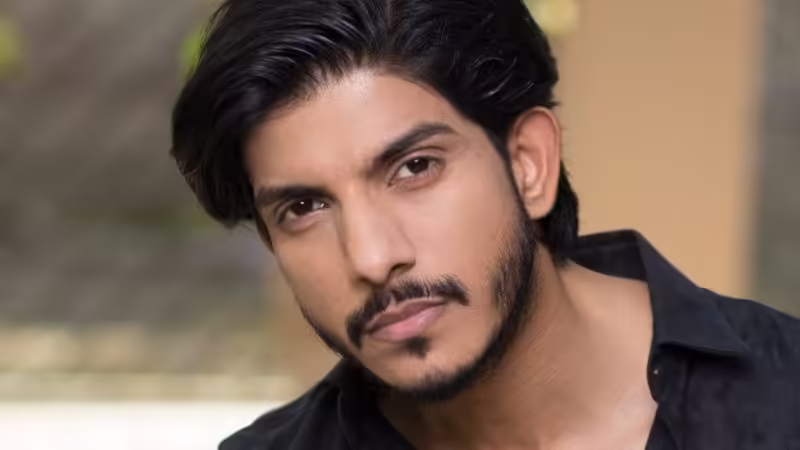
Mohsin Abbas Haider, sparked a huge online debate on International Men’s Day “Nobody Cares About Men?”
This year, International Men Day 2025 got unusually heated on Pakistani social media. What started off as a innocuous Instagram story from actor and musician Mohsin Abbas Haider escalated quickly into a national debate, sparking thousands of discussions, reactions, and think pieces. His message was short and blunt, emotionally charged as it hit many nerves.
In his post, Haider questioned whether men actually get words of appreciation from the closest women in their lives: their wives, sisters, or girlfriends. He concluded the post with a line that became an instant internet sensation: “Nobody cares about men.” Within minutes, screenshots had spread across TikTok, X, and Instagram, fueling conversations that refused to slow down.
A Message That Split the Internet
The controversy surrounding Mohsin Abbas Haider soon took a life of its own. Supporters praised him for voicing what they felt was rarely spoken, that too out loud: many men bear emotional and financial burdens quietly without ever receiving due credit. For them, the relatability factor lay in Haider’s statement, articulating long-buried emotions hidden behind the expectation of strength and stoicism.
On the other side of the spectrum, some critics panned the post for being over-simplified, insensitive, and sweeping in generalization. Some argued the message ignored privileges and support systems men already had. Others felt it shifted responsibility onto women while undermining the struggles women face within societies that are patriarchal in nature.
Yet beneath those polarized responses lay a deeper truth: conversations about men’s emotional well-being are still raw, unresolved, and often surrounded by cultural friction.
Why the Post Hit a Deep Cultural Nerve
In fact, discussions around men’s mental health and emotional needs often fall into grey areas across South Asian societies. While the expectations placed on men are immense-financial stability, social dominance, and emotional control-acknowledging their struggles can be culturally taboo.
Haider’s provocative message crashed into this long silence. Many reacted by saying they had never seen a celebrity from the entertainment industry express their feelings about men feeling so unappreciated in public. Others reacted to the fact that the message was not nuanced, noting how these very gender expectations ultimately hurt both men and women.
However, this viral conversation served one undeniable purpose: it opened a dialogue that many avoid.
Celebrities and Fans Join the Conversation
As the post spread, fellow celebrities, influencers, and fans joined in on the debate. Some clapped back to Haider’s thoughts by sharing personal stories of emotional neglect or societal expectations of men. Others took advantage of the moment to push for balance—acknowledging men’s struggles without undermining those of women.
Several mental health advocates remarked that it should be a conversation that, instead of dividing genders, was an opportunity to promote emotional support regardless of gender.
The Bigger Picture: A Reminder of What Still Needs Discussed
Regardless of which side the opinions fell, Mohsin Abbas Haider certainly ignited a national debate. His brief Instagram story reminded people that discourses regarding men and emotional expression are understudied, if not largely overlooked.
If anything, the debate made clear that society is ready—and perhaps in urgent need—to address these topics with greater empathy and less hostility.
International Men’s Day may have come and gone, but the reverberations of the conversation are still resounding through social media feeds. Whether one agrees with Mohsin Abbas Haider or not, his message reopened an important discourse on appreciation, emotional well-being, and cultural expectations.
For more updates, stories, and trending discussions, visit Pakistan Updates.