



Pakistan Afghanistan Border Conflict 2026: 42 Civilians Killed in Air Strikes
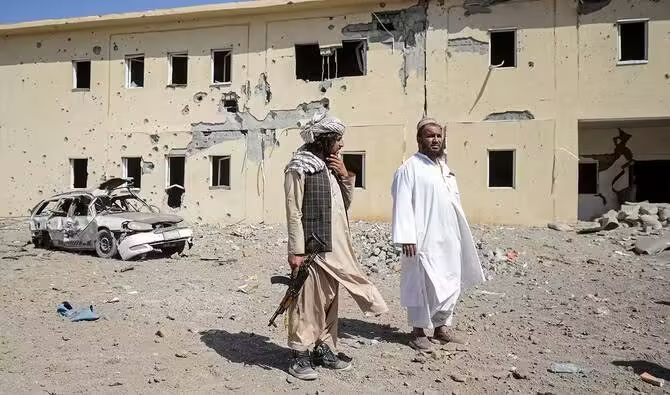
The Pakistan Afghanistan border conflict 2026 has entered its most devastating phase yet, with the UNAMA. Reporting a high civilian toll. Between February 26 and March 2, at least 42 civilians were killed and over 100 were wounded as cross-border clashes and air operations intensified. This conflict represents the most significant military escalation between the neighbors in decades, as the former allies-turned-foes grapple with rising insurgent activity.
UNAMA Reports Rising Human Cost
On Tuesday, March 3, UNAMA issued a preliminary report highlighting that the casualties include women and children caught in the crossfire. The violence, primarily driven by indirect fire and targeted air strikes, has affected residential areas in Paktika, Nangarhar, Kunar, and Khost provinces.
-
Displacement: An estimated 16,400 households have been forced to flee their homes.
-
Humanitarian Crisis: Many of these families were already recovering from devastating earthquakes in late 2025.
-
Restricted Aid: Active fighting has severely limited the ability of humanitarian agencies to deliver life-saving supplies to border communities.
Military Escalation: “Open War”
Pakistan has officially characterized the current state of hostilities as “open war.” On Tuesday, security sources confirmed that Pakistani jets conducted a successful air operation in Afghanistan’s Nangarhar province. Which destroying the Khogani military base. This strike was part of Operation Ghazab lil Haq, launched in response to what Islamabad calls “unprovoked aggression” by Afghan Taliban forces.
Information Minister Attaullah Tarar reported that over 67 Afghan Taliban personnel were killed in overnight operations across Balochistan and Khyber Pakhtunkhwa (KP). In total, Pakistan claims to have neutralized over 400 Taliban and TTP militants since the conflict reignited last week. Meanwhile, the Afghan Taliban claimed they captured a Pakistani border post in the Kandahar region and that their anti-aircraft systems managed to thwart attempted strikes on Bagram air base.
The Political Stance in Islamabad
Addressing a joint session of parliament, President Asif Ali Zardari maintained a firm stance. He reiterated that Pakistan would not allow any entity to use neighboring territory to destabilize its peace.
“The soil of Pakistan is sacred. We will not allow any entity—domestic or foreign—to use neighboring territory to destabilize our peace,” President Zardari stated.
The core of the dispute remains Islamabad’s allegation that Kabul is harboring the Tehreek-e-Taliban Pakistan (TTP). Which has stepped up attacks within Pakistan since 2021. Kabul denies these charges, claiming their actions are purely retaliatory for Pakistani violations of their airspace.
Islamabad Court Update: Relief for Imran Khan
Amidst the border crisis, domestic politics in Pakistan remains active. On March 3, 2026, an Islamabad court granted Imran Khan anticipatory bail in six cases. While the former Prime Minister remains incarcerated for other sentences. This ruling provides his legal team some reprieve as they prepare for major appeal hearings scheduled for March 11 regarding the Al-Qadir case.
As the international community, including Russia and China, calls for restraint, the border remains a flashpoint. The combination of military strikes and the displacement of thousands has turned the Durand Line. Into a major humanitarian concern for the year 2026.