



Punjab rolls out landmark Rs9.4 billion Wildlife and Eco-tourism revival push
Setting a good precedent for recent conservation, the Punjab government has approved two major initiatives amounting to Rs9.4 billion. Restoration of shrinking habitats, rebuilding fragile ecosystems, and spurring ecotourism across the Salt Range to Koh-e-Sulaiman is on the agenda, covering districts like Jhelum, Attock, Chakwal, Mianwali, and the rugged Koh-e-Sulaiman belt. The plan combines scientific rigor with community involvement in the reversal of ecological decline built up over decades.
Putting communities first: a Rs3.9 billion drive for habitat protection
Punjab Wildlife Conservation and Habitat Restoration Programme for Community-Based Conservancies, approved at Rs3.9 billion, is now a core pillar. It marks a shift from top-down approaches to empowering the grassroots. Under the scheme, 15 wildlife lodges will be handed over to the formally registered Community-Based Conservancies that will place on-ground protection, monitoring, and habitat management in the hands of people who live closest to nature. Four advanced breeding centers, each on 25 acres, will accelerate recovery related to vulnerable species.
A bold new refuge, a 300-acre enclosure in Koh-e-Sulaiman
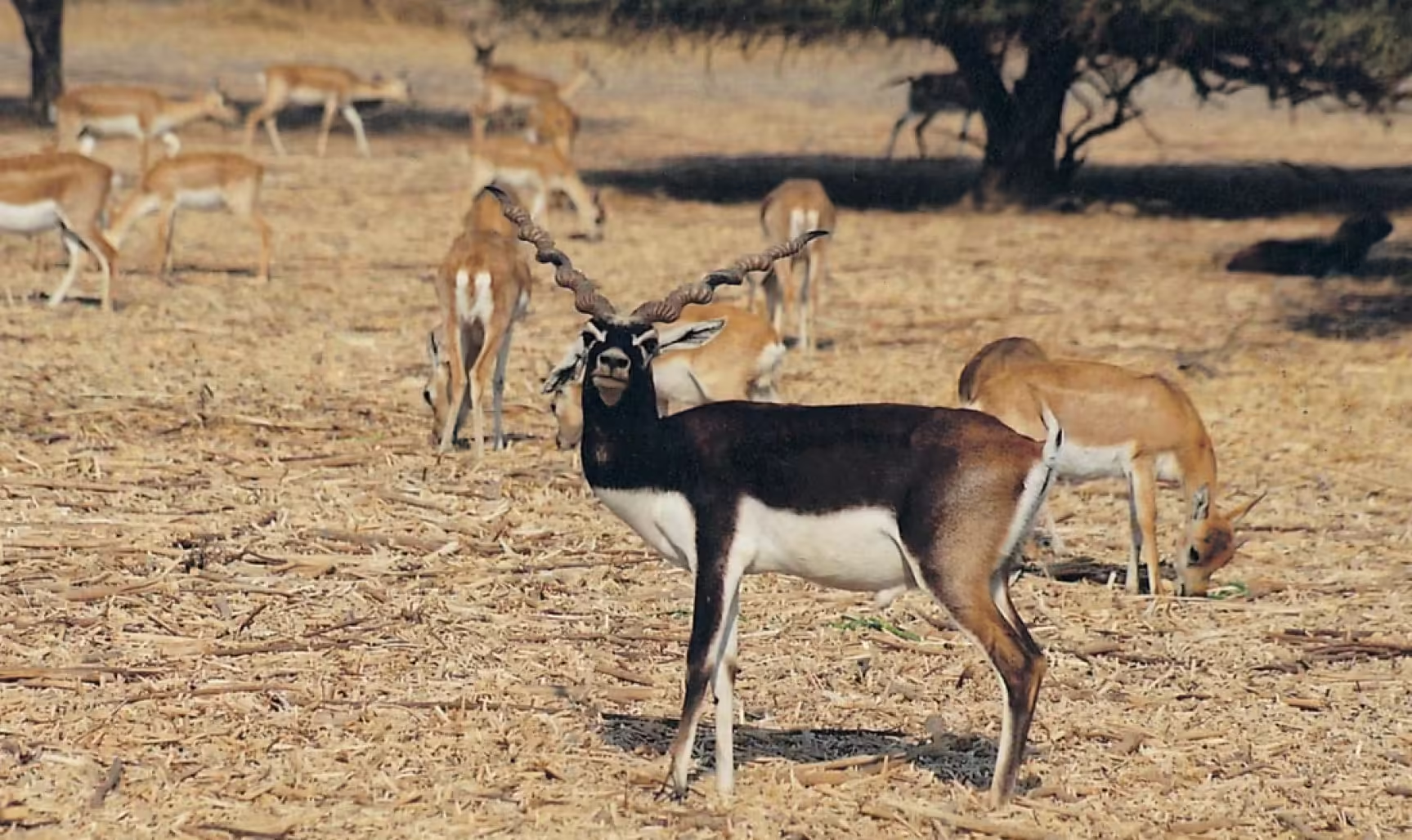
Of the many exciting elements, a 300-acre wildlife enclosure will be set up in the Koh-e-Sulaiman mountains to host the reintroduction of three iconic species: Urial, Chinkara, and Sulaiman Markhor. Reintroduction will be done according to internationally accepted scientific methodology to make growth sustainable, increase genetic diversity, and ensure long-term population stability, thus offering the chance for wildlife observers to see vanishing species again in their native territories.
Eco-tourism at the heart: Rs5.5 billion Salt Range National Park
The second major project, worth Rs 5.5 billion, seeks to bring the Salt Range at par with the most modern eco-tourism spots under the banner of Eco-Tourism Salt Range National Park. The package includes four state-of-the-art eco-lodges, a tourist restaurant exclusively constructed, a 20-acre family picnic zone, and the Salt Range Complex/Information Centre, a knowledge hub for visitors. The general idea is that in preserving the natural resources, there would also be attractions for tourists, researchers, and nature lovers from all over Pakistan and abroad.
A new era for sustainable development
Together, these Rs9.4 billion Punjab Wildlife Conservation Projects reflect something more valuable than money—a commitment to vision, responsibility, and hope. By mixing community involvement, scientific management, and eco-sensitive tourism, Punjab is pursuing a future in which development and conservation can proceed together. To the wildlife enthusiast, nature lover, and supporter of responsible travel, this is a promising beginning toward the restoration of Pakistan’s environmental heritage.
Stay tuned for further updates from Pakistan courtesy of Pakistan Updates.