



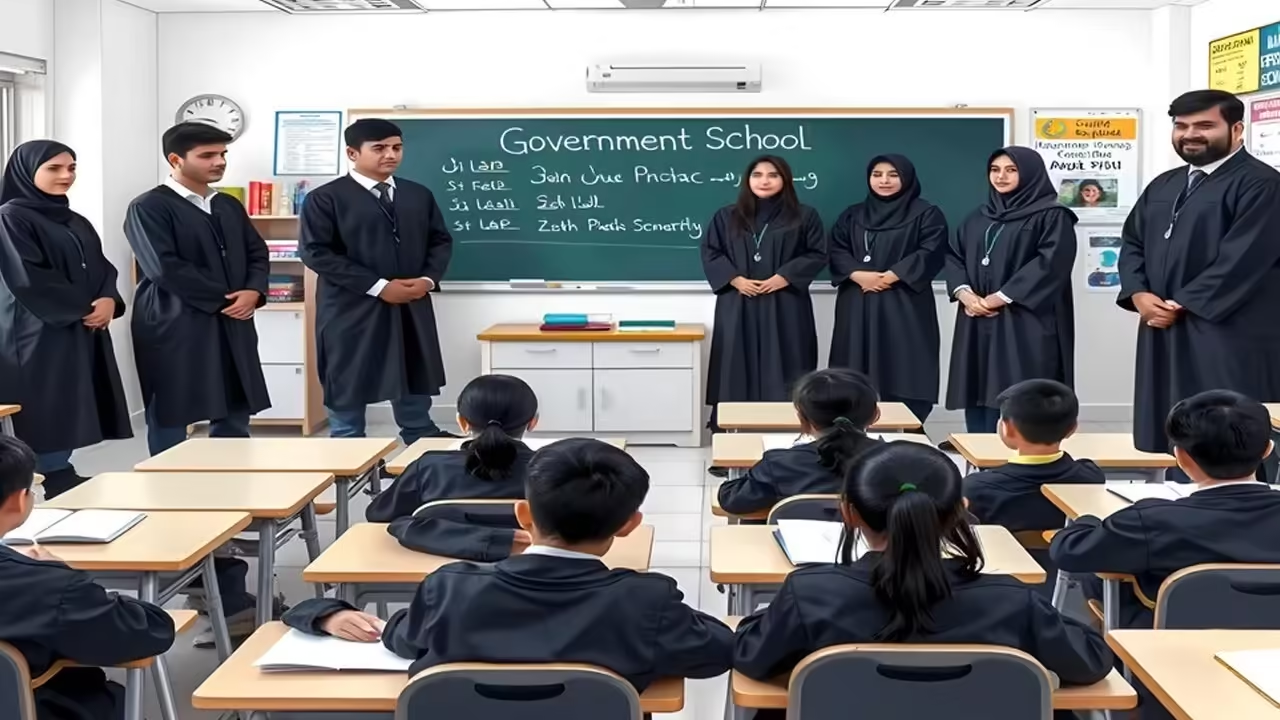
Punjab Government enforces the Black Gown Policy for Female Teachers starting February 23
Punjab’s government just dropped a new rule: starting February 23, every female teacher in public schools has to wear a black gown. No gown, no classroom. Officials say this isn’t just about clothes—it’s a push for discipline, unity, and a sharper professional vibe in schools all over the province.
The announcement set off a wave of conversation among teachers and parents. People see it as a sign the government wants to tighten up standards across Punjab’s entire education system.
Discipline sits right at the heart of this move. The government wants classrooms to look and feel more professional, and a uniform dress code for female teachers is their latest tool. There’s this long-held idea that uniforms bring order to schools. When teachers show up dressed the same way—tidy, formal, serious—it sets the tone for everyone else. The black gown isn’t just a fashion choice; it’s supposed to signal structure and authority, and bring a sense of togetherness and professionalism to school life.
Officials keep saying this isn’t only about what people wear. It’s about building a culture where teachers feel like they’re on the same team, sharing a sense of purpose and responsibility. Experts often point out that students pay attention to everything—not just what they’re taught, but how teachers carry themselves. A strict dress code, the thinking goes, helps make the whole place feel more focused, and reminds everyone who’s in charge.
The policy doesn’t leave much room for interpretation. School leaders have strict orders: don’t let any teacher into the classroom unless they’re wearing the black gown. The government plans to follow up with inspections and, if needed, disciplinary action. They’re making it clear—this isn’t a suggestion, and they expect everyone to get on board. Enforcement is going to be tough, with checks and rules in place to keep things consistent.
Not everyone’s thrilled, though. Some people like the idea—discipline, professionalism, a bit of order. Others think the government should focus on deeper issues in education, instead of just uniforms. There’s talk about how this affects teachers’ comfort, their autonomy, and whether it’s practical to roll out a rule like this in every school. The debate is everywhere, but one thing’s clear: Punjab’s administration wants uniformity to be a big part of its reform plan. Whether it actually changes what happens in classrooms, we’ll have to wait and see—but it’s definitely a big shift in how schools are run.
The Black Gown Policy for Female Teachers marks a turning point in Punjab’s school system. By making teacher attire a symbol of discipline and unity, the government hopes to leave a lasting mark on the way schools operate. With February 23 just around the corner, everyone’s watching to see how it plays out in real life and what it means for the future of education in the province.
For more real-time updates, keep following Pakistan Updates.