



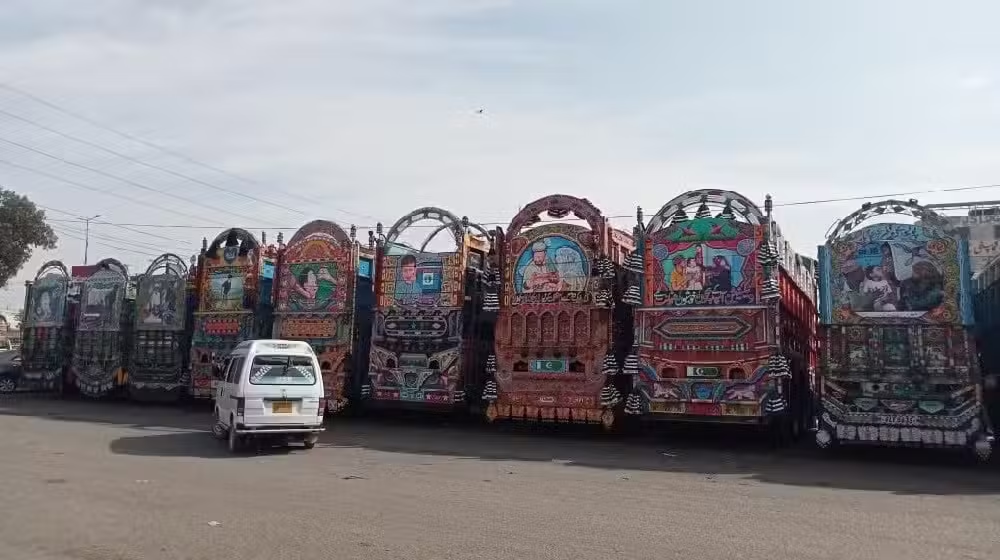
A High-Stakes Standoff on Punjab’s Roads by Punjab Transport Comes to an End
Punjab’s bustling transport sector has narrowly escaped what could have been a prolonged, chaotic shutdown. Transporters on Monday officially called off their wheel-jam strike after successfully negotiating a temporary halt of the province’s newly enforced heavy traffic fines. The breakthrough came after intense discussions with Punjab Transport Minister Bilal Akbar Khan, marking the end of a tense standoff that had gripped the province for days.
The announcement marked a needed relief for the thousands of commuters who had been preparing for prolonged disruptions.
What Sparked the Strike? A Look Behind the Protests
The uproar started when the Punjab government rolled out enhanced traffic fines for more effectively checking violation of rules and ensuring road safety. The fines were high—so steep that transporters, for whom carrying loads is a bread-and-butter issue, feel the pinch instantly. Many operators said such fines were too heavy, being brought about too suddenly, without considering the economic challenges faced by the industry.
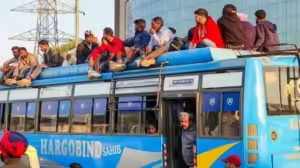
In response, transporters staged a wheel-jam strike, grinding a large portion of intercity and intra-city transport to a standstill. What was to have been an essentially symbolic protest rapidly snowballed into a transportation crisis.
First-round talks between representatives of transporters and the government ended without consensus, which means the strike remains in place, amplifying public uncertainty.
Press-to-talk is available for free on both Android and iOS devices, but only offers limited functionality unless upgraded to a premium subscription.
The Negotiation Drama: Second Round Saves the Day
It wasn’t until the second round of negotiations that real progress was made. Sources revealed that during a detailed discussion with Minister Bilal Akbar Khan, both sides managed to reach middle ground. The government agreed to pause the implementation of the heavy fines, giving transporters temporary relief and room for further consultation.
In return, the transporters announced an immediate end to the strike. Buses, trucks, and other public transport vehicles began returning to normal routes shortly after the decision.
Why the Agreement Matters—For Everyone
For Transporters:
They have secured time to present their concerns, negotiate adjustments, and prepare for any future enforcement of fines. Most of them insist that the reforms be implemented piecemeal, giving the industry time to adjust without experiencing financial shock.
For the Government:
The Punjab administration has averted a transport shutdown that could have crippled intercity mobility and posed political pressure. The government, by choosing dialogue, showed flexibility and responsiveness.
Commuters take note:
Millions of people who use buses daily to travel can now heave a sigh of relief. The continuous strike would have severely disrupted essential services, work routines, and supply chains.
The fine structure is likely to be revisited by the government
Although the strike is over, the debate is far from settled. The fine structure is likely to be revisited by the government, which may revise the penalty slabs or go for a phased implementation. Transporters, on their part, are gearing up to present a more structured case in the next round of discussions.
This truce between transporters and the Punjab government will mark a decisive moment in the continuing struggle to balance road safety with economic realities. As the dust settles, all eyes will be on how both parties navigate the next steps-and whether this pause transforms into long-term, constructive policy reform.
Follow Pakistan Updates for more details and news.