



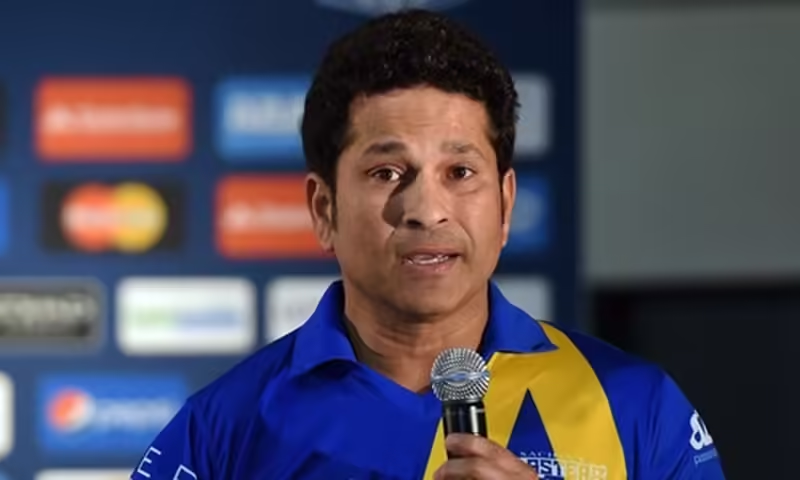
Cricket, Diplomacy, and National Pride Disturbed the Sporting World by Sachin Tendulkar Powerful Remarks About Pakistan Boycott
Sachin Tendulkar, a name revered not only in India but worldwide, has reportedly expressed scathing criticism of Indian Foreign Affairs Minister Jay Shankar‘s policies relating to recent cricketing events involving Pakistan. Because his comments cover far beyond runs and results, reaching the delicate junction of sports, diplomacy, and national pride, they have provoked strong controversy.
Recognized for his composed attitude and rigorous public presence, Tendulkar’s remarks have caught much attention especially because he seldom engages political debate. The cricketing world listens—and responds—when a person of his caliber speaks.
Pakistan’s match boycott and its symbolic importance
The allegedly boycotted India-Pakistan cricket match has once again brought to light the great extent to which politics may shape sports in South Asia. According the tale going around, Tendulkar conveyed dismay over the state of affairs, asserting that India’s sporting pride on an international stage had been harmed by Pakistan’s departure from the game.
Cricket between India and Pakistan transcends simple game. It is a worldwide extravaganza encapsulating diplomacy, history, competition, and emotion. The absence of such a match affects fans, athletes, broadcasters, and the spirit of competitive sport itself, not only tournament schedules.
Criticism of Governance and Policy
The center of the dispute centers on Sachin Tendulkar’s supposed criticism of Jay Shankar’s diplomatic style. Tendulkar’s alleged position represents a more general opinion held by several cricket fans who think that rather than serving as a political battleground, sport ought to be a bridge among countries.
Although foreign policy choices are multifaceted and layered, the repercussions in the sporting world frequently seem direct and personal. Tendulkar’s remarks highlight a rising annoyance with cricket, a uniting force for millions, still being hampered by administrative and diplomatic standoff.
Cricket: Instrument of Soft Power
For decades, cricket has worked as a kind of mild power on the subcontinent. When conventional diplomacy faltered, historical tours, famous handshakes, and iconic series have frequently helped to lower tensions. Tendulkar’s comments appear to reflect this idea, implying that disengagement degrades cultural and people-to–people links as well as sporting ties.
By pointing out how the boycott purportedly impacted India’s pride, Tendulkar draws attention to the emotional toll suffered by fans and players both. When politics dominate the pitch, the game loses its soul.
Reaction of the Public and Response of the Industry
As might be expected, the responses vary. Supporters have lauded Tendulkar’s bravery to speak on issues bigger than cricket for saying what many feel but are afraid to express. Critics contend, nevertheless, that past athletes ought to stay neutral in political matters irrespective of their legacy.
Cricket experts and past players have also commented on the need for uniform policies that safeguard the integrity of international sport while also honoring national interests.
One Event That Transforms the Debate
Whether you agree with him or not, this show signals a major turning point in contemporary cricket debate. The criticism of Sachin Tendulkar has rekindled debates on where sports end and political starts, as well as who is to blame when famous rivalries give way to diplomacy.
One fact stays constant as the world watches intently: cricket thrives on competition, interaction, and continuity. Legends’ speech sometimes matches millions of pulses.
Visit Pakistan Updates for additional regional insights, breaking developments, and in-depth analysis.