



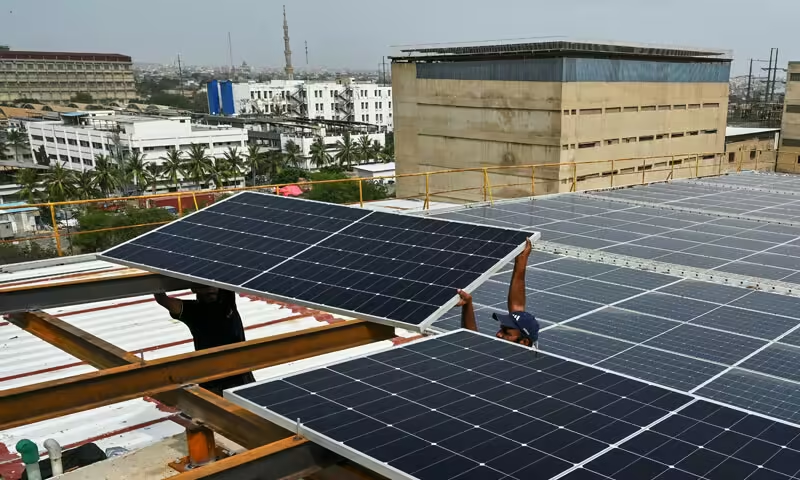
Pakistan Net-Metering Policy Changes: A National Controversy
The recent Pakistan net-metering policy changes have turned what was once a success story into a regulatory fiasco. Federal Minister for Power Sardar Awais Khan Leghari recently defended these adjustments in the Senate. However, the sudden shift from net metering to net billing has left thousands of prosumers feeling betrayed. While the government claims these steps are necessary for grid stability, critics argue the move damages public trust and investor sentiment.
Initially, the government introduced generous incentives to encourage solar adoption. During the 2010s, solar panels were expensive, and the country needed clean energy. Consequently, many middle-income and affluent households invested heavily in rooftop solar. However, as global solar prices collapsed and local grid tariffs surged, the incentive structure became lopsided.
The Ministry of Power argues that high solar adoption creates “negative externalities.” Specifically, the grid must still provide power during non-solar hours. Meanwhile, the influx of power during peak sunny periods can destabilize the aging infrastructure. Unlike countries such as Australia or South Africa, which adjusted policies gradually, Pakistan waited until connections doubled in a single year before acting.
The Impact on Prosumers and the Grid
Currently, there are approximately 450,000 net-metered users in Pakistan. Although this group represents a small fraction of the 37.6 million total consumers, they are significant economic contributors. The new “net billing” framework keeps buying prices low for the government but alters the financial payback for the users.
This policy inconsistency is a recurring theme in Pakistan’s power sector. From the IPP crisis of 1994 to the current circular debt, the government often reacts too late. By delaying the right framework, they allowed the number of solar users to reach an “uncomfortable level” before pulling the rug out from under them.
Future of Renewable Energy
Despite the controversy, solar adoption is unlikely to stop. Many experts believe that users will simply pivot toward battery-based solutions to remain independent of the grid. This could further reduce demand for government-provided electricity, potentially increasing capacity payments for everyone else.
The Pakistan net-metering policy changes highlight a deeper issue of planning. While the government secured climate resilience loans in 2025, it failed to balance green goals with grid economics. Now, the challenge lies in restoring trust while ensuring the power sector remains financially viable.
Please visit Pakistan Updates For More