



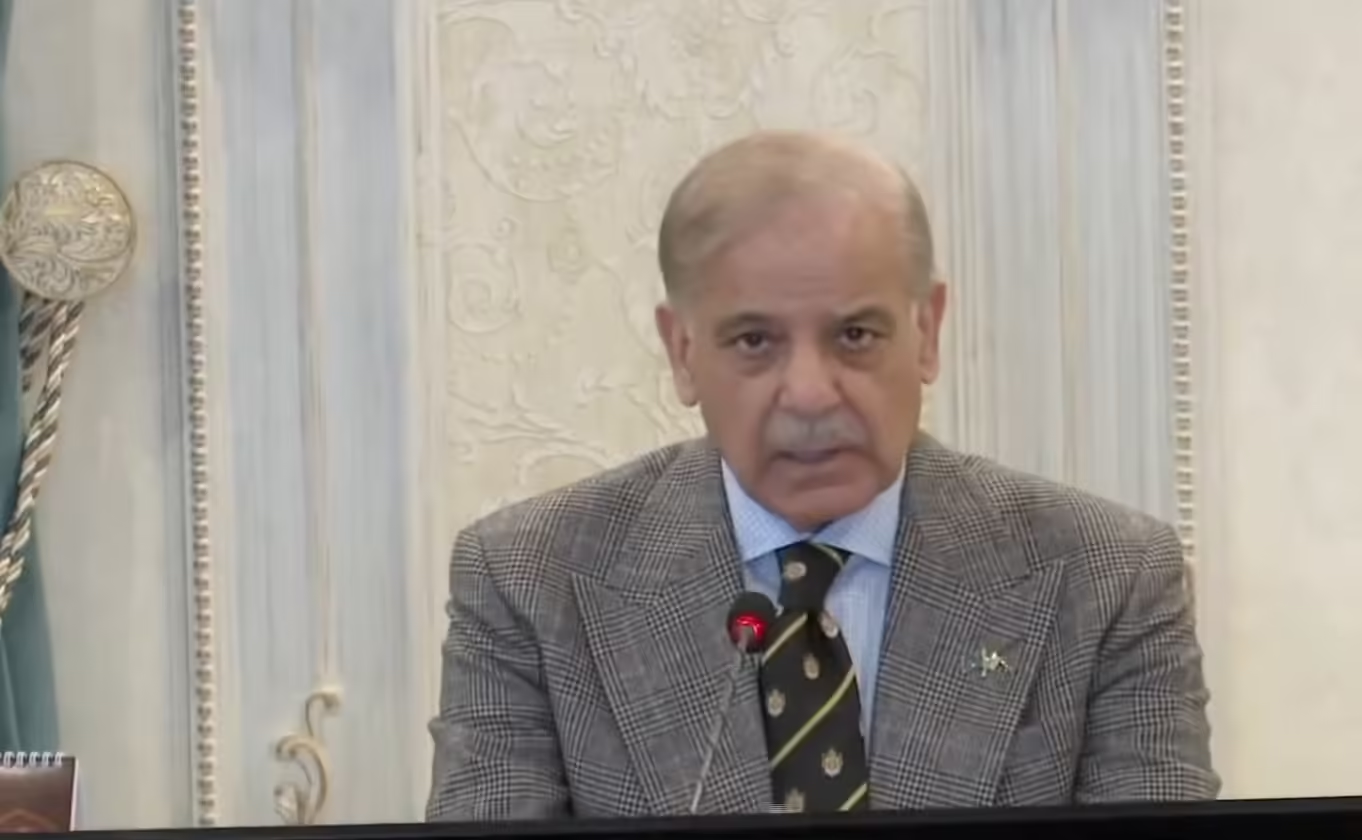
Pakistan PM Shebaz Sharif is determined about the Boycott decision of not playing against Indian Team at T20 World Cup 2026
Pakistan’s Prime Minister Shehbaz Sharif has declared that Pakistan will not participate in the ICC Men’s T20 World Cup 2026, a bold and highly symbolic gesture. Reflecting profound questions about justice, administration, and regional solidarity, the choice extends beyond the cricket ground. Pakistan’s attitude has fast changed the narrative surrounding the next world competition in a sport that sometimes mirrors geopolitical realities.
Solidarity with Bangladesh at the Core
Pakistan’s show of support with Bangladesh forms the core of its protest against the Pakistan India T20 World Cup. Citing practical and security issues, Bangladesh had officially asked the International Cricket Council (ICC) to move its games away from India. The ICC denied the request, nevertheless, and substituted Scotland for Bangladesh’s games. Pakistani authorities saw this action as disrespectful and unjust, reading it as one more instance of biased decision-making inside world cricket governance.
Pakistan has set herself as a passionate supporter of smaller cricket countries by standing with Bangladesh, stressing that fair treatment should be applied to all members regardless of political or financial influence.
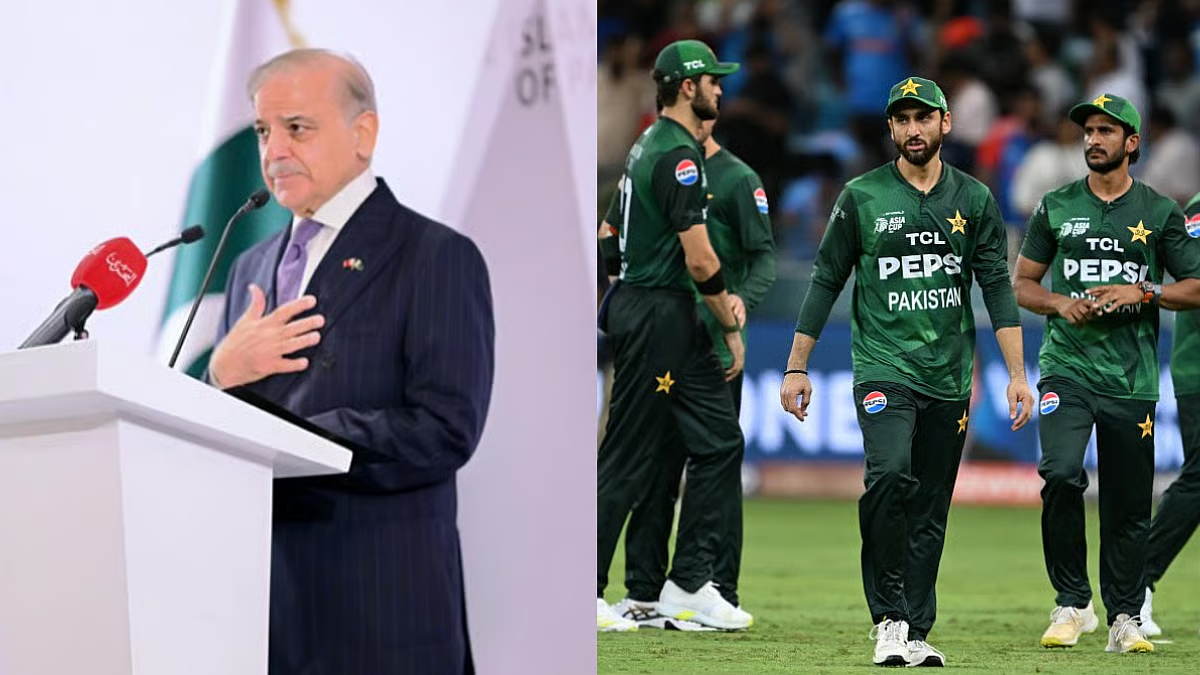
Claims of bias inside the ICC
Pakistani criticism has not ended at procedural arguments. Senior Pakistani leaders have forthrightly charged the ICC, especially its president Jay Shah, of discriminatory decision-making. Pakistan’s leaders claim that the way Bangladesh’s request was handled revealed structural flaws inside the ICC, where strong cricket boards are supposed to have undue influence.
These accusations call into question the legitimacy of the worldwide governing body and spark more general issues about openness, neutrality, and responsibility in international cricket. For Pakistan, the boycott is a demand for institutional change and justice rather than only a demonstration.
The Reaction of ICC and the Worldwide Cricket Community
Warning that the boycott could damage the spirit of the game and let millions of fans all around down, the ICC has asked Pakistan to rethink its decision. Cricket runs on memorable rivalries, after all; few match the intensity and worldwide draw of an India–Pakistan encounter. Such a prominent withdrawal sends ripples felt by broadcasters, sponsors, and fans.
Pakistan has kept its stance despite these calls, indicating that values and brotherhood take precedence over business and amusement factors. The stalemate draws attention to the increasing conflict between cricket as a worldwide industry and cricket as a means for moral and political expression.
Consequences for the 2026 T20 World Cup
Pakistan’s unwillingness to compete India brings doubt into tournament planning and causes questions concerning scheduling, point distribution, and competitive balance. It especially establishes a precedent whereby national boards may use participation more and more as negotiating power to solve governance issues.
Fans will definitely miss an India- Pakistan game. Still, for cricket officials and politicians, this could be a trigger for self-reflection and change within the ICC structure.
A Turning Point in World Cricket Administration
The Pakistan India T20 World Cup boycott stands as a landmark in contemporary cricket history. It emphasizes how closely entwined the game now is with politics, power relations, and institutional trust. Still to be determined is whether this boycott causes significant reform or more polarization.
Pakistan has opted to voice its voice on the international scene, using cricket not just as a pastime but as a declaration of principle, though.
For more news and updates, visit Pakistan Updates.