



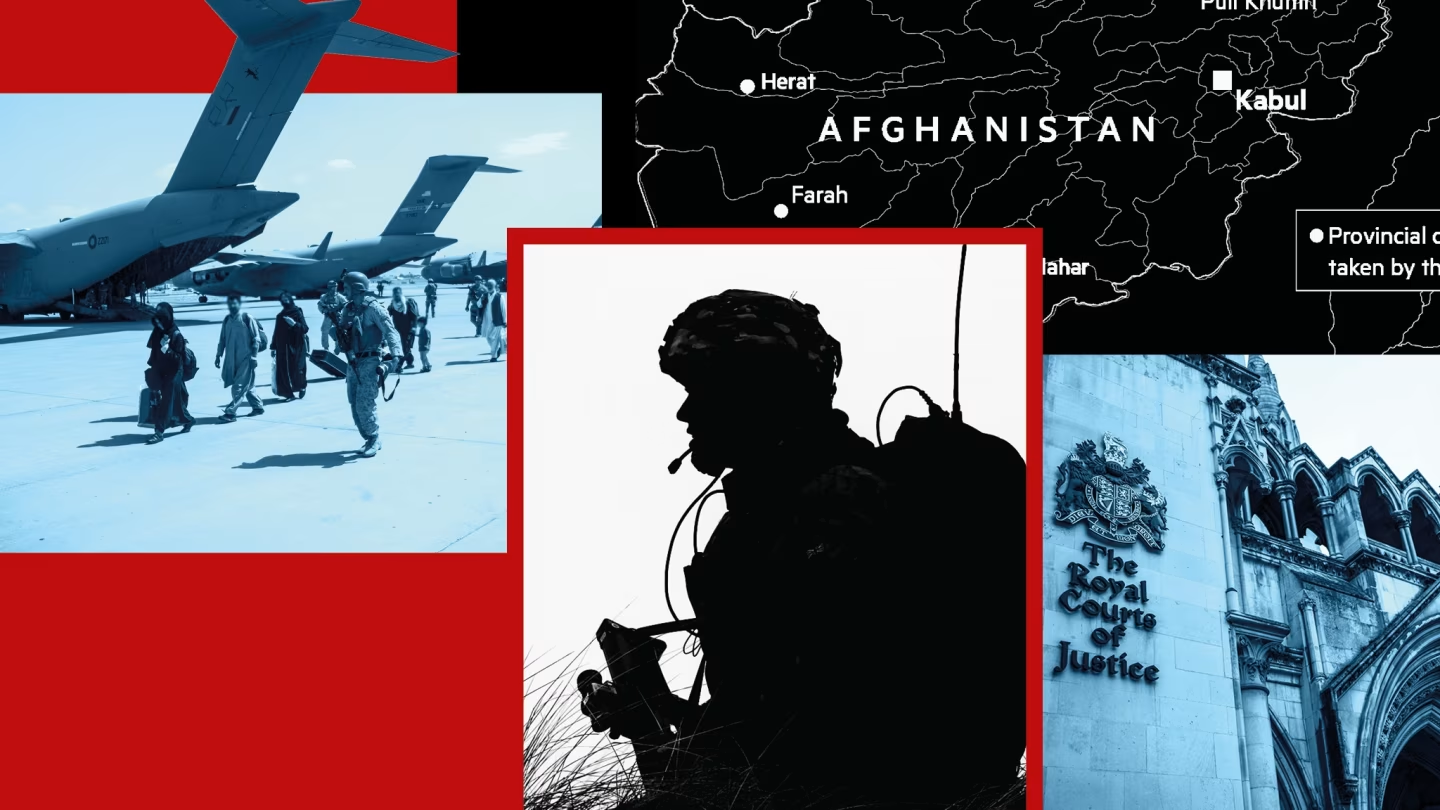
U.S. Citizenship and Immigration Services announced a complete suspension of all Afghan Resettlement
On November 26, 2025, just a few blocks from the White House, in Washington D.C., an unbelievable action was unfolding in the streets. Two members of the United States National Guard were severely injured due to the firing of a lone gunman at close range.
Law-enforcement quickly identified the suspect as a 29-year-old Afghan national. He was taken into custody after being wounded, while the Guardsmen were rushed to hospital. The attack — in broad daylight — rattled the nation on the eve of Thanksgiving: a moment meant for gratitude, now marred by fear.
In response, the Trump administration declared the shooting an “act of terror,” promising swift justice and renewed scrutiny into the immigration policies that allowed the suspect to enter the country.
Immigration on Ice: What Has Changed
Almost immediately — within hours of the incident — U.S. Citizenship and Immigration Services announced a complete suspension of all immigration requests involving Afghan nationals. In a terse post on X, formerly Twitter, the agency stated:
“Effective immediately, processing of all immigration requests relating to Afghan nationals is stopped indefinitely pending further review of security and vetting protocols.”
That freeze includes visas, asylum applications, asylum-related resettlement, and any other immigration channel for Afghans. No Afghan application will proceed until the Government completes a careful reevaluation of its security and vetting processes.
Who Is Affected — And What’s at Stake
For many Afghans around the world — including those who had found their way to Pakistan and the surrounding countries — this abrupt suspension is deeply unsettling. Thousands had pinned hopes of safety, resettlement, or reunification on the U.S. immigration system.
Now their dreams are frozen. This closure of “the last path to safety,” as one journalist referred to it, leaves desperate people, fleeing persecution, violence, and instability, stranded in limbo.
Refugee advocates have countered that such a reaction is unfair and disproportionate- penalizing hundreds of thousands for the actions of a single person. Human lives, often hanging in the balance, are now subject to political winds and bureaucratic reviews.
The Broader Implication: Security vs. Compassion
What the policy shift really shows is a brutal trade-off: increased security at the cost of humanitarian commitments. The Trump administration in the United States is digging deeper into strict vetting and immigration controls, most especially on sensitive groups, when many among those seeking refuge had to flee horrors really far beyond their control.
Meanwhile, critics underscore that such blanket suspensions risk turning a targeted criminal act into widespread collective punishment. They say this undermines the principle of individual assessment-a cornerstone of fair asylum and immigration processes.
What Comes Next: Uncertainty, Waiting, and Lives in Limbo
For now, there is no end date for the suspension. Afghan nationals who reached American soil already may well be scrutinized further. Those in distant refugee camps, or still in Pakistan, or elsewhere — waiting for approval — watch the process stall.
As security reviews unfold and policymakers debate, so does the human cost mount: families separated, dreams deferred, futures suspended. And for many, this decision means one more blow in a long journey toward safety and stability.
The abrupt halt to Afghan immigration processing underscores the fragility of asylum-seeking in a world where one person’s deed can reshape the fate of thousands. While national security can be a legitimate priority, moral and humanitarian consequences remain stark-and deeply personal.
Follow Pakistan Updates for more news and updates.