



The “Begging Mafia” Behind Gulf Visa Woes
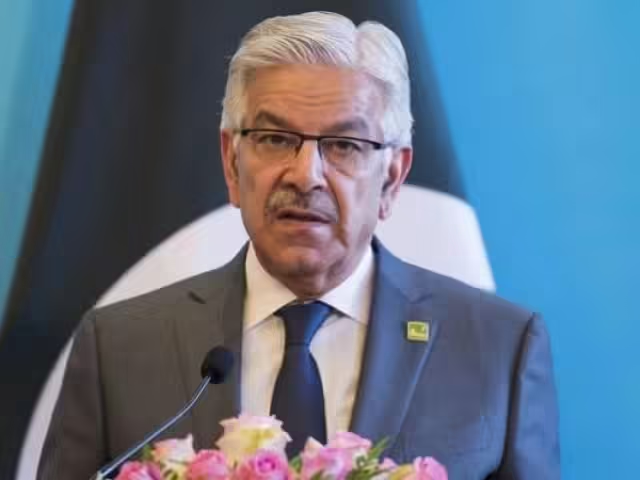
Defence Minister Khawaja Asif has taken to social media to call out a “bitter reality”: the organized begging rings that he claims are ruining Pakistan’s reputation abroad. In a blunt assessment shared on Monday, Asif argued that the visa restrictions recently imposed by Gulf nations are not arbitrary but are a direct reaction to the “export” of professional beggars. He described the operation as a highly lucrative, contractor-led business that recruits vulnerable people, including children and the disabled, to earn millions through fake pretenses.
Corruption at the Gate: Allegations of Insider Help
Perhaps most strikingly, the Defence Minister did not save his criticism for the gangs alone. He alleged that this illicit trade thrives because of “equal partners” within various government departments stationed at airports. Asif suggested that such a massive outflow of professional beggars could not happen without the silent approval or active participation of the very officials meant to guard the country’s borders.
“This business is linked with several other highly disturbing criminal activities and calls for serious and sustained action to dismantle the networks involved.” Khawaja Asif
A National Image Crisis
The scale of the problem is reflected in recent enforcement data. In 2025 alone, the Federal Investigation Agency (FIA) off-loaded over 66,000 passengers suspected of being part of these rings—a number that has nearly doubled in the last year. These individuals often travel on Umrah or tourist visas but are eventually deported; notably, 56,000 were sent back from Saudi Arabia alone. Asif noted that while local crackdowns in cities like Sialkot have seen some success, the “contractors” behind these mafias often use their social and financial influence to bypass the law whenever things get heated.