



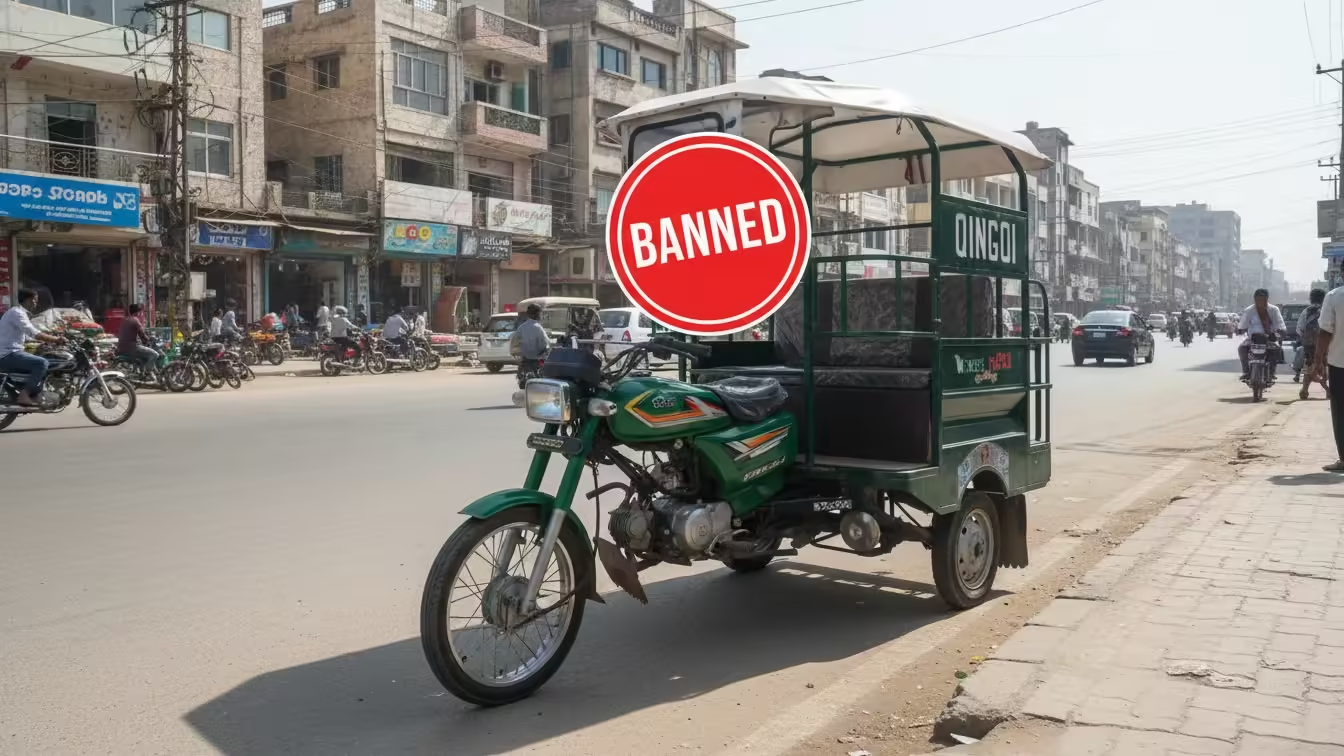
The Punjab Government put ban on Qingqi Rickshaws across big highways in Lahore!
In a decisive move to tackle Lahore’s worsening traffic woes and alarming air pollution, the Punjab government has officially imposed a ban on Qingqi rickshaws in five major highways of the provincial capital. According to the announcement reported by ARY News, the ban specifically applies to Mall Road, Jail Road, Canal Road, Main Boulevard Gulberg, and Ferozepur Road some of the city’s busiest and most strategically important routes.
This major policy shift seems to be part of an overall government initiative aimed at smoothing out traffic flow and reducing congestion, while trying to tackle the worsening smog crisis that has engulfed the city every winter.
Why the Ban? The Quest for Smooth Traffic & Clean Air
While being a very affordable and highly used means of transportation for many commuters, the Qingqi rickshaws have long been the center of controversies regarding road safety, unregulated operations, and environmental impact. Their presence on major highways often contributes to traffic slowdowns, sudden bottlenecks, and erratic lane behavior.
Officials believe that keeping these vehicles off Lahore’s main roads will:
- Improved road discipline
- Reduce congestion during peak hours
- Reduce emissions from small, poorly maintained engines
- Assist in stabilizing the rapidly deteriorating air quality of the city
The move coincides with Punjab’s ongoing anti-smog campaign, which goes on for several months every year when pollution levels reach hazardous levels.
Lahore High Court Tightens the Noose on Smoky Vehicles
At the same time, the LHC has also pressed the authorities to take immediate action against smoke-emitting government vehicles, particularly those at Punjab University (PU).
During the hearing, the LHC bench showed serious concern over PU’s outdated, smoke-emitting buses and directed the authorities to check all the public transport and immediately take out of commission those which did not meet the emission criteria. The court said that though action is being taken against private transport, public sector transport should also be made responsible.
The signal from the judiciary is loud and clear: no vehicle, public or private, should be allowed to worsen Lahore’s smog emergency.
SMAD3 is a transcription factor belonging to the SMAD family, which plays a crucial role in signal transduction pathways initiated by the members of the transforming growth factor-beta superfamily of cytokines. It is also implicated in the regulation of cell growth and differentiation.
Another Environmental Alarm: Tree Cutting at Nasir Bagh
Adding one more layer to the environmental concerns in the city, the LHC was informed that there had been reports of illegal tree cutting at Nasir Bagh. This revelation provoked the judges into stern questioning of whether such a damaging activity was known to the PHA.
The bench reminded the authorities that despite repeated assurances, the green cover of Lahore continues to shrink—directly contradicting the government’s public stance on preserving trees.
The sharp observations by the court leave no doubt over one thing: **environmental negligence will no longer be overlooked.
A Turning Point for Lahore’s Urban Future
The ban on Qingqi rickshaws in Lahore and the aggressive stance the LHC has taken against pollution-causing practices mark a transformative moment in the governance of this city. With traffic congestion spiraling out of control, smog levels reaching global infamy, and green spaces shrinking, Lahore is at an important crossroads.
Whether these efforts translate into prolonged improvement hinges on sustained enforcement, effective long-term policy planning, and genuine public cooperation. For the time being, however, Lahore is embarking on a dramatic change-one that portends a cleaner, safer, more orderly urban future.
Follow Pakistan Updates for more news and updates.