



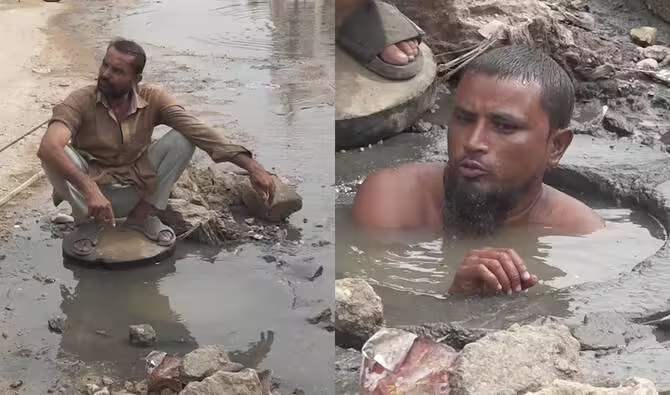
Petition filed by the National Commission for Human Rights, highlighting the hazards faced by Manual Sewer Cleaning
In a move that could redefine labour rights, the National Commission for Human Rights stood before Pakistan’s Federal Constitutional Court on a Friday to press a petition seeking to ban one of the country’s most dangerous and degrading jobs: manual sewer cleaning. Filed under Article 184, the petition calls for a nationwide ban on this dangerous practice and demands comprehensive health and safety protections for sanitation workers.
This is the first time that the sanitation workers are being scrutinized at the top level of the judiciary under the constitutional rights framework of Pakistan. For thousands who daily risk their lives in toxic manholes, this case could bring the long-elapsed dawn of justice.
A Courtroom Charged With Urgency
A three-member bench, headed by Justice Aminuddin, heard the petition. The NCHR spelled out the brutal realities afflicting sanitation workers: entering sewers without protective gear, lacking in safety tools, and with no emergency relief systems in place. Many never come back.
Barrister Iqbal Nasar, appearing pro bono for the NCHR, gave a somber update: a sanitation worker had died in Sindh just the day before the hearing. This death was not an isolated incident but yet another entry in the long record of preventable tragedies due to neglect, weak rules, and outmoded local practices.
The seriousness of the issue echoed back as notices were issued to the relevant authorities by the bench of the court.
Constitutional Rights in Clear Jeopardy
The petition contends that manual sewer cleaning as a continuous practice violates basic rights enshrined in the Constitution, including the right to life, human dignity, equality, and a safe and decent work environment. Even though they deal with frontline duties, sanitation workers continue to be among the most marginalized and vulnerable groups in Pakistan. As the NCHR emphasized, no person should be compelled to carry out work which intrinsically threatens life and dignity.
A Nation Without Safety Standards
Another important point is the lack of a standardized national safety framework for sanitation work in Pakistan. The cities and provinces have fragmented rules and many of them fail to even meet the basic occupational-safety norms. Without proper training, equipment, and emergency-response systems, workers face:
Toxic sewer gases
Risk of asphyxiation
- Musculoskeletal injuries
- Potentially life-threatening accidents
The NCHR emphasizes that these hazards are not only foreseeable but entirely preventable with modern mechanized cleaning technologies.
“Cruel and Unacceptable”: NCHR Chair Speaks Out
NCHR Chairperson Rabiya Javeri Agha attended the hearing and presented a clear moral argument: The forced cleaning of sewers with bare hands is cruel and is not acceptable. In a modern state, no citizen should have to risk death performing work that could—and should—be mechanized.
Her comments highlighted the urgency and gave a face to a profession that has long been overlooked and shamed.
Setting a Precedent of Dignity and Equality
If the petition succeeds, it could be a turning point in Pakistan’s legal and social landscape. Beyond banning manual sewer cleaning, it would clear the path for more stringent workplace safety laws, improved labour protections, and reclaimed dignity for thousands of sanitation workers across the country. For Pakistan, it is a crossroad of history where attention might finally focus on the lives of its most forgotten workers.
To stay updated with more national developments and human rights updates, please follow Pakistan Updates.