



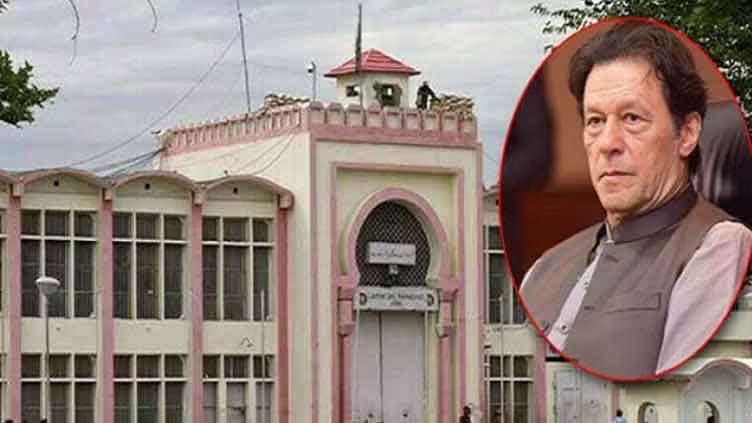
Islamabad police stand-off as Imran Khan’s sisters show up late outside Adiala Jail
A night that felt frozen in more ways than one: Islamabad, Adiala Jail, and a standoff that shimmered with tension. The focus remains clear—Islamabad police stand-off—and the scene centers on the empty gates, the chill in the air, and the stubborn pace of events unfolding outside the prison walls.
The story opens on a bone-cold Islamabad evening. The city is quiet, almost listening for something to happen. Outside Adiala Jail, Imran Khan’s sisters show up late in hopes of a quick, compassionate visit with their jailed brother. Instead, they are met with a firm refusal-entry denied. The moment ripples out through the growing crowd of supporters, aides, and curious onlookers that had gathered in hushed anticipation.
The air grows thick with every passing moment
Security forces tighten their cordon, and the air grows thick with every passing moment. The cold seems to join hands with frustration on the ground, as hushed conversations turn into murmurs of unease. The situation worsens as police resort to water cannons, a blunt gesture in such freezing temperatures. There are no major injuries reported, but what this scene loudly says is that it is a rift between the state and the PTI leadership, not easily mendable, with even family visits turning into high-stakes showcases of power.
The immediate tension is gradually eased as negotiations between PTI representatives and authorities go through, but the episode leaves a question mark over prison protocols, political sensitivities, and the fraught power dynamics of the country.
Pakistan should go forward without any further jiggle of the constitution
In another, equally censorious, moment, Bilawal Bhutto-Zardari steps into the frame with a position of finality. The message-stability through constancy-lands at a time when questions about governance, judiciary authority, and reforms are being discussed everywhere. His position is viewed simultaneously as a word of caution against opportunistic amendments and an invitation to bringing about a more balanced institutional framework.
Equally puzzling are Karachi’s crime statistics across the map. The latest numbers present a contradictory picture: some categories, such as street thefts, show declines on paper but which residents insist remain frequent-possibly even more so on account of daily life. Analysts point to possible underreporting, reclassification, or the innate complexities of urban crime. The lived experience of safety for people inhabiting Karachi is incoherent with the presented data; this again leads to no confidence in law enforcement.
Away from the metropolises, Balochistan preserves a long-standing ritual that continues to captivate and concern in equal measure. In remote areas, communities still practice fire-walking—bare feet crossing smoldering embers as part of spiritual or communal traditions. Supporters justify it as cultural heritage, while critics question its safety and necessity in a country whose healthcare resources are already stretched taut. The ritual endures, handed down through generations, a glowing thread linking the present to a storied past in a changing Pakistan.
Thus, a country of striking contrasts-a cold night at Adiala, a fiery cultural ritual in Balochistan, a political line drawn by Bilawal and Karachi’s data that refuses to align completely with everyday experience. Every night there are stories simmering just beneath the surface, waiting to be heard.
Follow Pakistan Updates for more news and updates.