



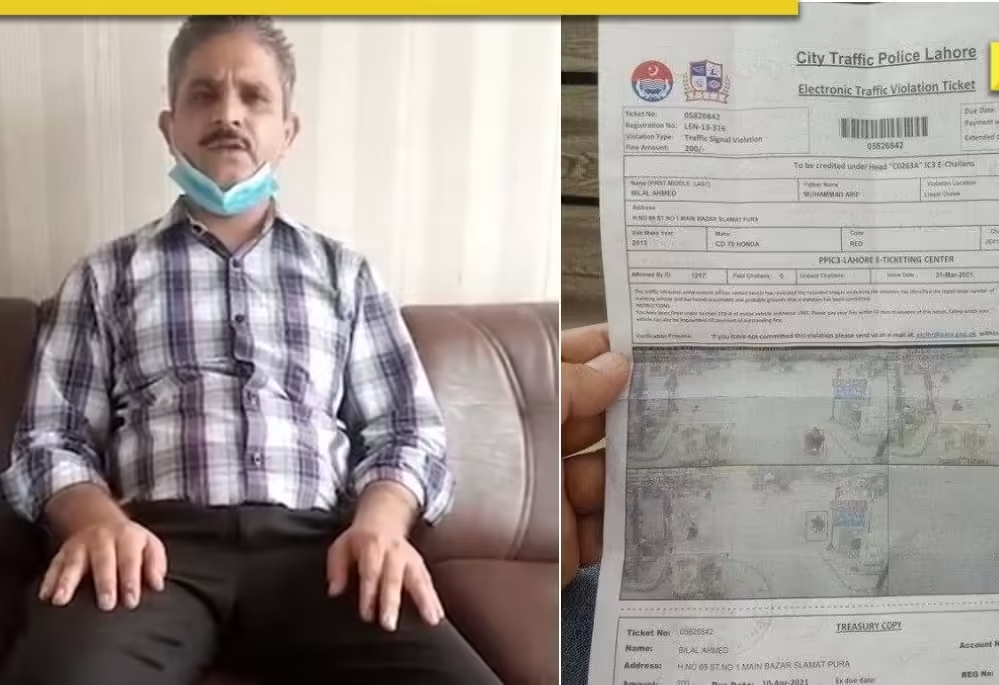
Lahore Man from Raiwind received multiple e-challans for a motorcycle that was stolen over a year ago!
In a troubling case that highlights gaps in Pakistan’s digital traffic enforcement system, a Lahore resident from Raiwind has been left distressed after receiving multiple e-challans for a motorcycle that was stolen over a year ago. The incident has sparked renewed debate around accountability, coordination, and efficiency within law enforcement and Safe City surveillance mechanisms.
For the victim, what should have been a closed chapter after registering a theft complaint has instead turned into a prolonged bureaucratic nightmare.
Motorcycle Theft Reported, FIR Registered
According to the affected citizen, his motorcycle was stolen in early 2024. Acting responsibly, he immediately approached the authorities, and an FIR was officially registered at Raiwind police station in February 2024. This legal step should have protected him from any future liabilities related to the stolen vehicle.
However, despite completing all formalities, the citizen was shocked to receive another e-challan recently—more than a year after the theft.
E-Challans Keep Coming, Questions Keep Growing
The most alarming aspect of this case is that the e-challan system shows the stolen motorcycle actively involved in traffic violations across various roads in Lahore. Each challan not only adds financial pressure but also emotional distress for the victim, who has no control over the vehicle’s misuse.
This situation raises a critical question: if the Safe City cameras and e-challan system can track the motorcycle’s movements, why has the vehicle not been recovered yet?
A System That Tracks, But Doesn’t Act?
Lahore’s Safe City Authority is widely promoted as a technologically advanced surveillance network capable of identifying vehicles, tracking movements, and enhancing public safety. Yet, cases like this expose a serious disconnect between data collection and law enforcement action.
The victim has pointed out that the system clearly identifies the motorcycle on Lahore’s roads. Still, there appears to be no effective coordination between traffic authorities, police departments, and Safe City officials to flag the vehicle as stolen and stop issuing challans to the original owner.
Emotional and Financial Toll on the Victim
Beyond the technical failures, this e-challan issue in Lahore has taken a human toll. Repeated fines, the fear of legal complications, and the frustration of being unheard have left the citizen mentally exhausted. What makes the ordeal worse is the sense of helplessness—having followed the law, yet continuing to suffer due to systemic inefficiencies.
Appeal to Senior Authorities
The affected individual has now appealed to senior police officials and relevant authorities to intervene. He has requested:
- Immediate recovery of the stolen motorcycle
- Removal of all e-challans issued after the FIR date
- A transparent inquiry into why the system failed to flag the vehicle as stolen
Such action, he believes, would not only bring him relief but also prevent similar cases in the future.
A Wake-Up Call for Digital Governance
This incident serves as a stark reminder that technology alone is not enough. Without proper integration, verification, and accountability, digital systems can unintentionally victimize the very citizens they are meant to protect.
For public trust to remain intact, authorities must ensure that once a vehicle is reported stolen, all connected systems—police records, Safe City databases, and traffic enforcement platforms—are synchronized in real time.
Follow Pakistan Updates for more news and updates.