



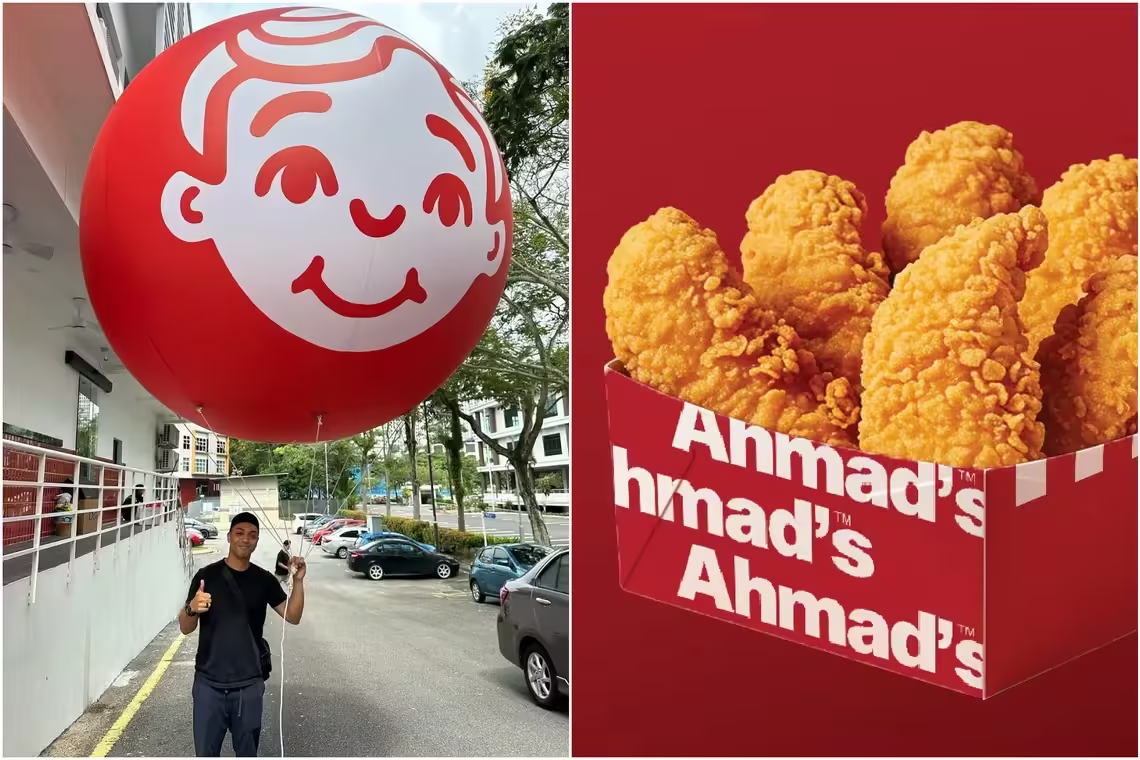
Malaysia response to the Gaza war – Opened its own Fast Food Outlet Ahmad Fried Chicken!
Malaysia’s response to the Gaza war has gone far beyond hashtags and street protests. In an extraordinary shift, public outrage over the humanitarian crisis — and strong opposition to U.S. support for Israel — has translated into a powerful consumer movement. Instead of merely boycotting global fast-food giants like McDonald, Malaysians have actively built and embraced their own alternatives. At the heart of this movement is Ahmad’s Fried Chicken, a local brand that has rapidly transformed from a small venture into a national phenomenon.
This is not just a story of fast food. It is a story of identity, values, and how consumer choices can quietly but decisively reshape an entire market.
The Birth of Ahmad’s Fried Chicken
The idea behind Ahmad Fried Chicken emerged during a period of intense public emotion. As images from Gaza circulated worldwide, calls for boycotting Western brands linked — directly or indirectly — to Israel grew louder in Malaysia. Among those listening was entrepreneur Lailatul Sarahjana Mohd Ismail, who saw both a moral responsibility and a business opportunity.
Rather than relying on foreign franchises, she envisioned a proudly Malaysian fried chicken brand that aligned with local values. Ahmad’s Fried Chicken was launched with modest resources, focusing on affordability, halal assurance, and flavors tailored to Malaysian tastes. What it lacked in scale, it made up for in symbolism.
Explosive Growth Driven by Solidarity
What happened next surprised even seasoned observers of Malaysia’s retail sector. Consumer support surged. Outlets that once served neighborhood crowds began attracting long queues. Within a short span, Ahmad’s Fried Chicken expanded to 35 outlets across the country, signaling that this was not a passing trend.
For many customers, choosing Ahmad’s Fried Chicken became an act of solidarity with Palestine. For others, it was simply a chance to support a local entrepreneur standing up to multinational dominance. Either way, the brand benefited from a rare alignment of ethics and economics.
A Wider Shift Away from Global Brands
Ahmad’s Fried Chicken is not alone. Malaysia’s food and beverage landscape is undergoing a broader transformation. Homegrown chains such as Zus Coffee are also expanding rapidly, capitalizing on the same wave of consumer nationalism. Together, these brands are redefining what success looks like in a market once dominated by global names.
This shift reflects a deeper change in mindset. Malaysian consumers are increasingly asking where their money goes and what values it supports. Brand loyalty is no longer built solely on convenience or pricing — it is now intertwined with political awareness and cultural pride.
Is the Change Here to Stay?
Industry analysts believe this transformation may be permanent. Once consumers discover local brands that meet — or exceed — international standards, there is little incentive to return to foreign chains. Local companies are reinvesting profits domestically, creating jobs and strengthening Malaysia’s entrepreneurial ecosystem.
Moreover, younger consumers are especially drawn to brands that reflect their social and ethical concerns. Ahmad’s Fried Chicken has become more than a restaurant; it is a symbol of how ordinary purchasing decisions can express collective values.
Redefining Malaysia’s Food Future
Malaysia’s quiet fast-food revolution shows that boycotts do not have to end in absence. They can lead to creation. Ahmad’s Fried Chicken stands as proof that when consumers and entrepreneurs move in the same moral direction, new industries can flourish.
What began as a response to global injustice has evolved into a blueprint for local empowerment — one fried chicken outlet at a time.
Visit Pakistan Updates for more news and updates.